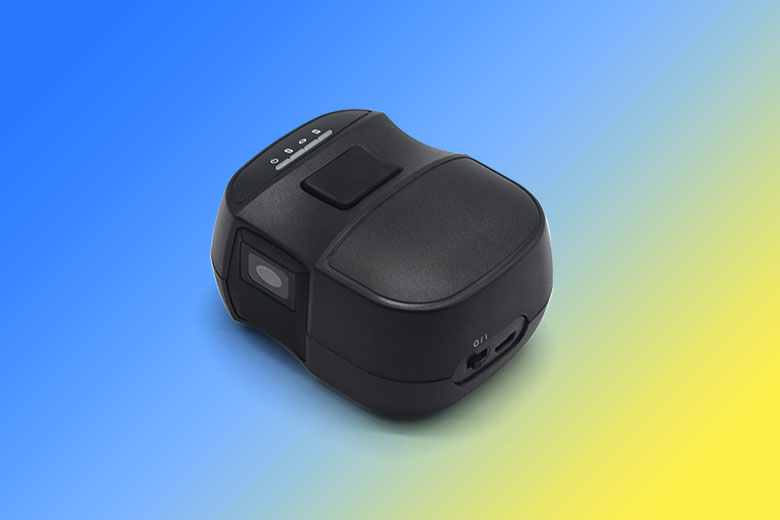
1. Key Features
- Plastic-housing reflectance instrument: Uses the same internal optical configuration as the NIR-R210; the main difference is that the housing material is plastic.
- Covers the 900-1700nm band: Suitable for rapid reflectance spectral acquisition of agricultural products, food, materials, pharmaceuticals and chemical samples.
- Portable use: Integrates the housing, Bluetooth, lithium battery and MicroUSB interface, suitable for mobile sampling, demonstration and teaching scenarios.
- Simpler contact measurement: Built-in light source and window; obtain reflectance or absorbance spectra simply by placing it close to the sample.
- Compatible with the secondary-development workflow: Applications can follow the same acquisition workflow, SDK and model-development approach as the NIR-R210.
2. Specifications
2.1 Technical Parameters
| Item | Parameter |
|---|---|
| Model | NIR-S-G1 |
| Product type | Plastic-housing reflectance NIR spectrometer |
| Internal spectrometer module | NIR-M-R2 |
| Added whole-unit configuration | Plastic housing, Bluetooth, lithium battery; identical to the NIR-R210 except for the housing material |
| Wavelength range | 900-1700nm |
| Signal-to-noise ratio | 5000:1 (1 s scan) |
| Optical resolution | Typ. 10nm |
| Wavelength accuracy | Typ. ±1nm |
| Detector | 1mm standard InGaAs (uncooled) |
| Slit size | 1.8mm × 0.025mm |
| Light source | Built-in 2 × 0.7W tungsten lamps |
| Measurement mode | Diffuse reflectance / contact reflectance |
| Communication interface | MicroUSB / Bluetooth BLE |
| Power supply | USB or lithium battery configuration |
| Operating temperature | 0-40°C, RH Max. 85% |
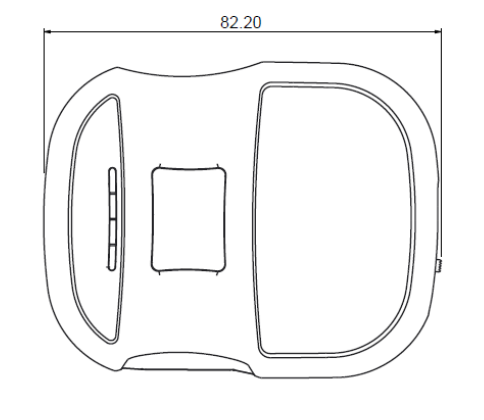
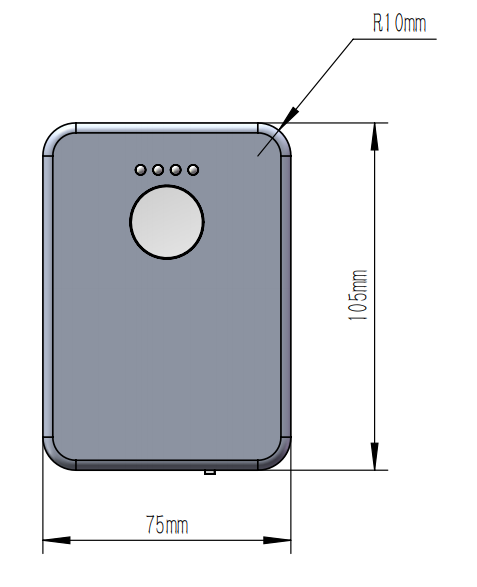
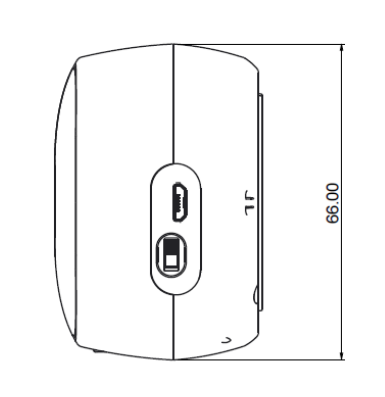
| Dimensions | Per the plastic-housing structure drawing |
| Weight | Per the actual plastic housing and lithium battery configuration |
2.2 Structure and Dimensions
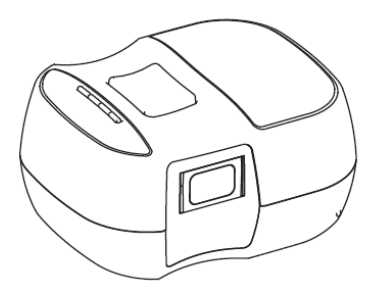
The NIR-S-G1 uses the same whole-unit structural platform as the NIR-R210; the main difference is that the housing material has been changed to plastic. Structural dimensions can be understood from the drawings below; detailed item versions can be confirmed against the actual housing configuration.
3. Applications
The NIR-S-G1 is suited for reflectance NIR detection scenarios that require direct handheld testing or customer demonstrations. Compared with bare-board modules, the whole-unit structure is better suited to frequent movement, field sampling, training demonstrations and small-project validation.
Typical applications include fruit sugar content and ripeness assessment, grain and feed quality analysis, plastic and textile material identification, pharmaceutical excipient identification, and soil and mineral sample analysis. The specific model performance depends on the sample quantity, the accuracy of the reference method and the sampling consistency.
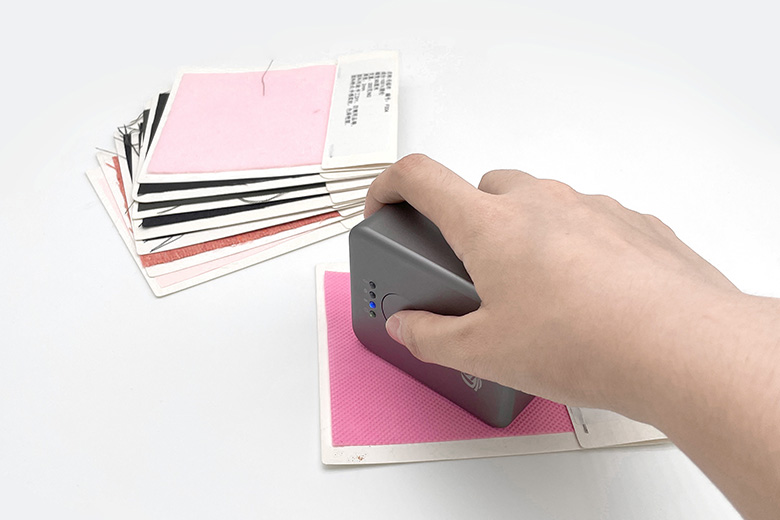
Fabric testing
Qualitative or quantitative analysis of fabric composition and content ratio
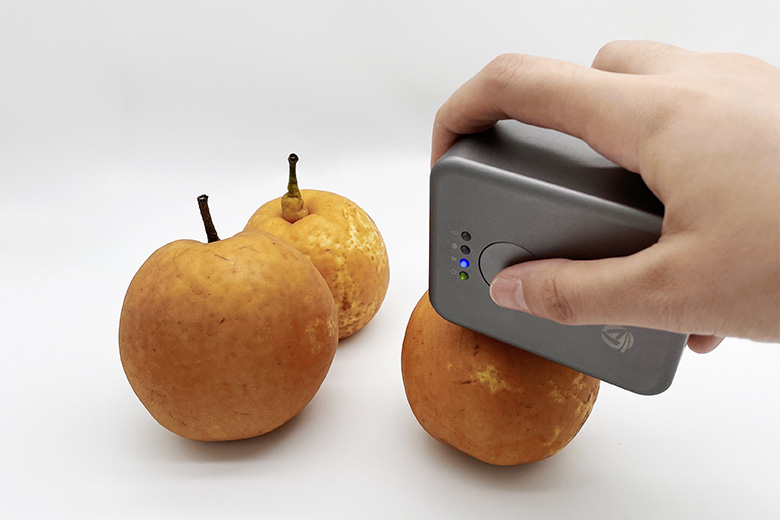
Fruit testing
Quantitative analysis of quality indicators such as sugar content, moisture and freshness
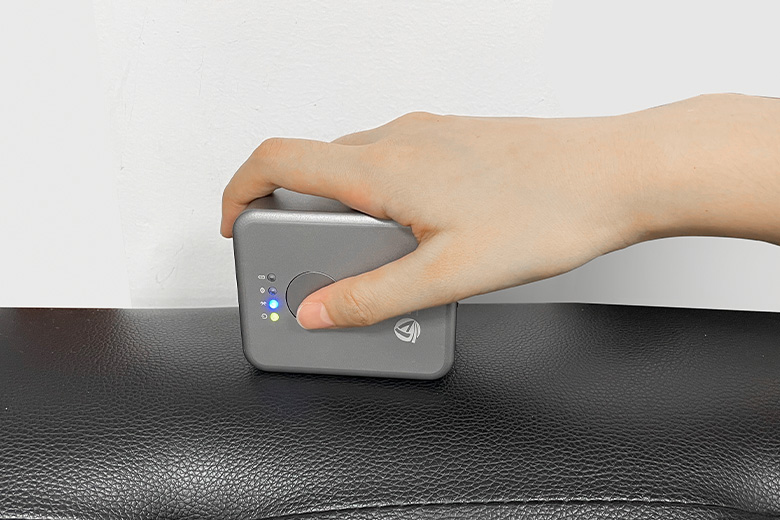
Leather identification
Qualitative analysis of leather composition, supporting authenticity identification
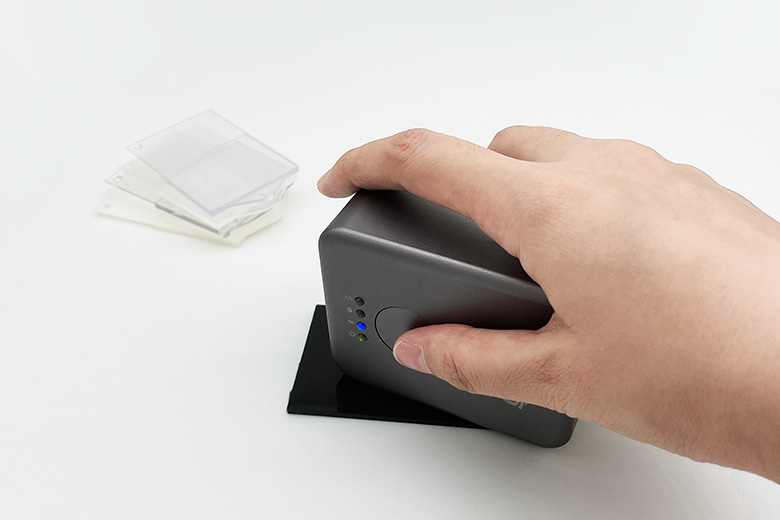
Plastic identification
Rapid qualitative identification of plastic composition, suitable for incoming inspection
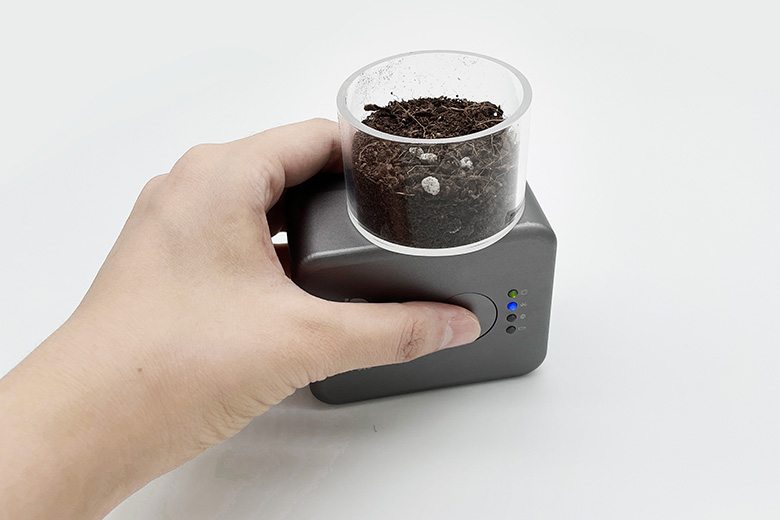
Soil analysis
Quantitative detection of soil fertility indicators; powder samples should be measured in a transparent quartz container
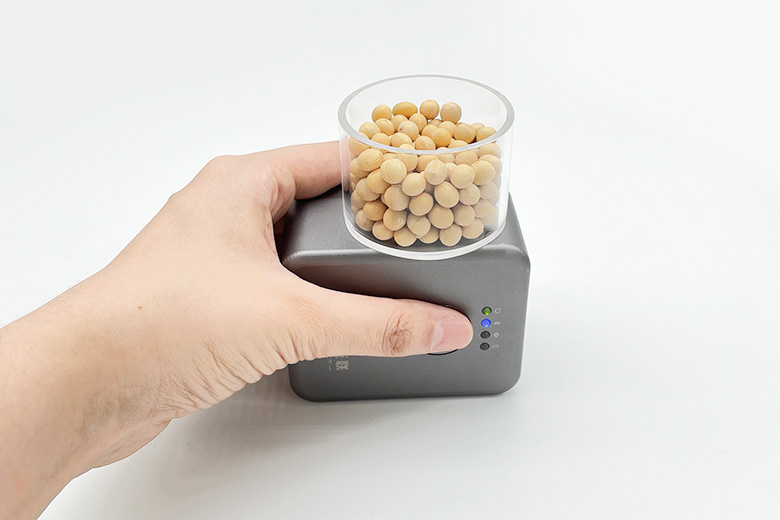
Grain testing
Qualitative or quantitative analysis of grain quality components; granular samples should be measured in a transparent container
4. Typical Spectra
The spectra below illustrate the reflectance spectral features or characteristic application regions of common samples within the corresponding band of this model, and do not represent per-unit measured data for this model.
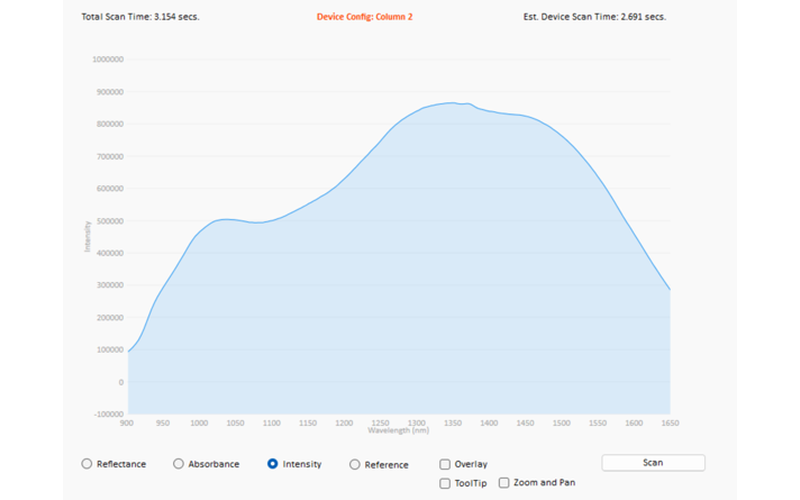
Raw spectrum of a standard white reference
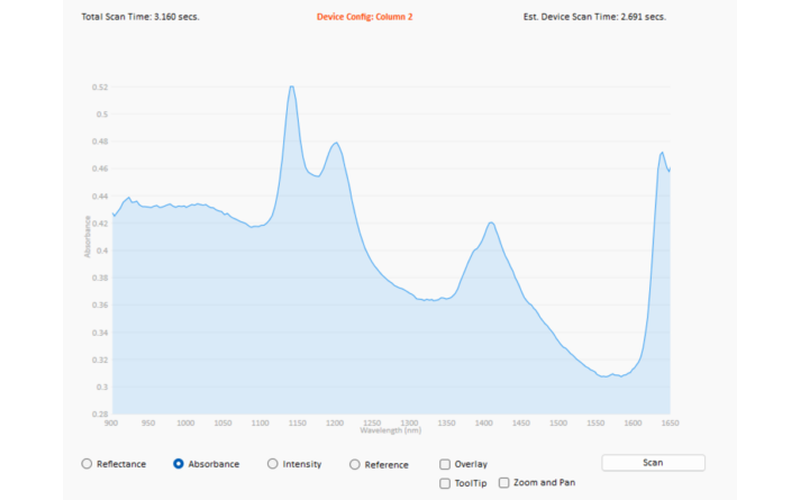
Reflectance absorbance spectrum of ABS plastic
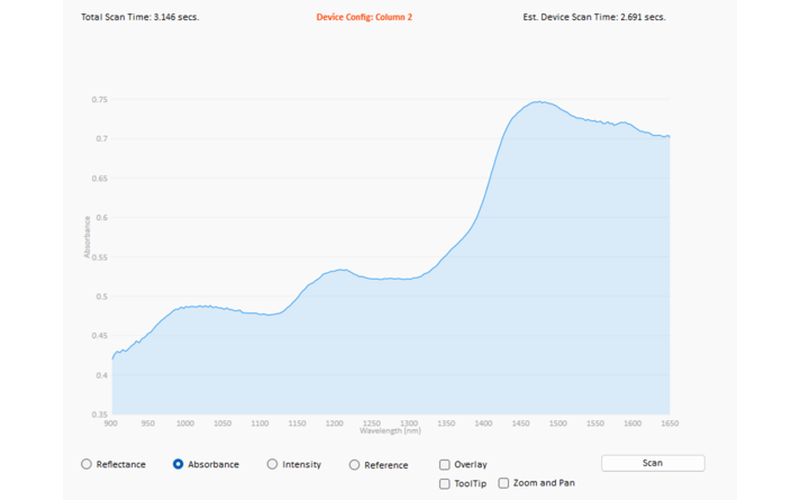
Reflectance absorbance spectrum of soybean
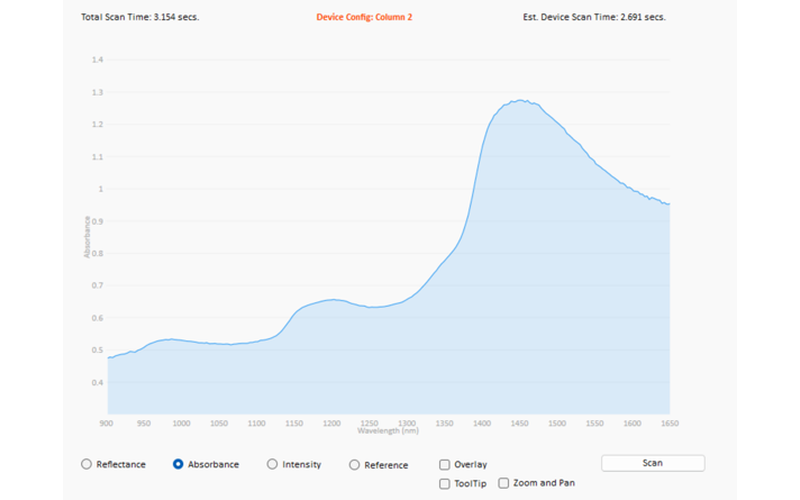
Reflectance absorbance spectrum of human skin
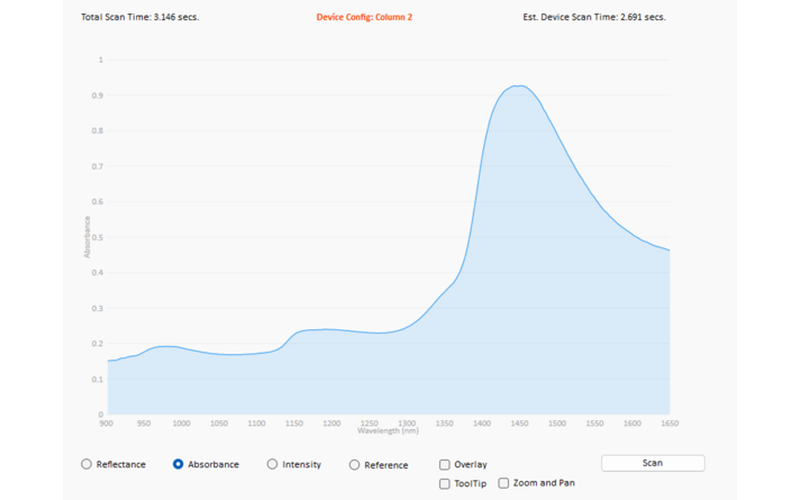
Reflectance absorbance spectrum of plant leaves
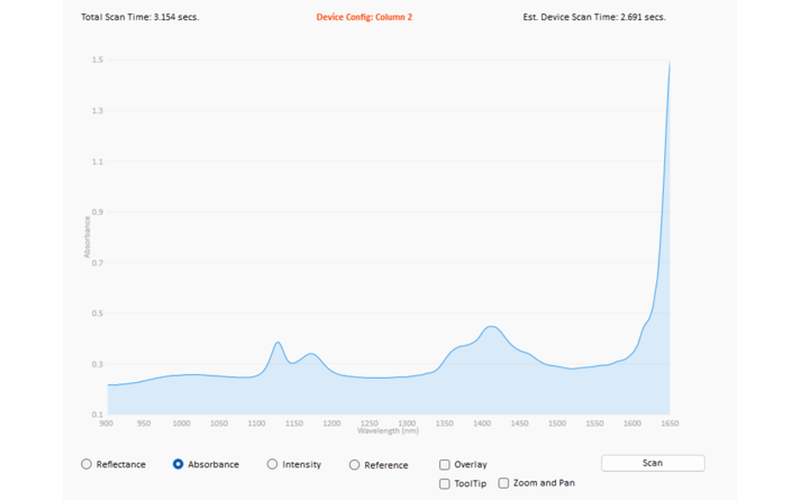
Reflectance absorbance spectrum of soil
5. Ordering Information
| Product name | Model | Quantity | Unit price | Amount (CNY) |
|---|---|---|---|---|
| Plastic-housing reflectance NIR spectrometer | NIR-S-G1 | 1 | 19580 | 16830 |
| Standard reference white plate | STD-DR100 | 1 | 950 | 950 |
| Total | 20530 |
The prices above are for website selection display. Actual quotations are adjusted according to housing, interface, software, accessories, calibration and batch quantity; the formal quotation from sales shall prevail for procurement.
6. Principle
6.1 Chemical Principle
NIR spectroscopy is a form of molecular vibrational spectroscopy. The fundamental vibrations of molecules lie mainly in the mid-infrared region, while overtone and combination transitions fall into the 700-2500nm near-infrared region. This product covers the 900-1700nm band and can capture the characteristic absorption information of hydrogen-containing groups such as O-H, C-H and N-H, making it suitable for qualitative identification, content prediction and process monitoring when combined with chemometric models.
NIR spectra usually do not rely on a single peak; instead, the absorption features of multiple bands are combined for modeling. In practical projects, preprocessing and modeling methods such as smoothing, normalization, SNV, first derivative, second derivative, MSC or PLS are often used to reduce the effects of sample morphology, optical-path differences, scattering and temperature drift.
6.2 Optical Principle
In a reflectance product, the light source, scanning window and receiving optical path are fixed within the whole-unit structure. After the sample is illuminated, it produces a diffuse reflectance signal, which enters the DLP spectral core for wavelength selection and InGaAs detection, making it suitable for non-transparent solids, powders, granules and sheet samples.
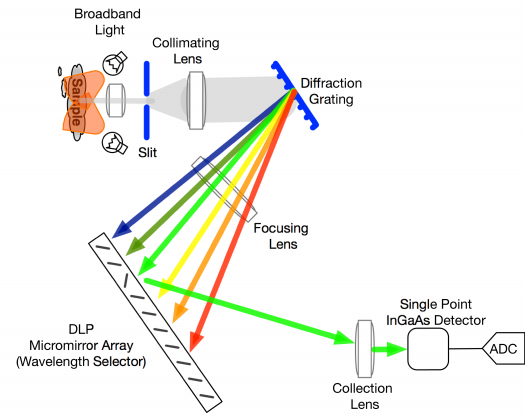
The NIR spectrometer products in this series are based on a DLP spectral architecture and use a grating-dispersion design: light passes through the slit, is collimated, and illuminates the grating; the light of different wavelengths produced after grating dispersion lands side by side on the digital micromirror array (DLP) mirrors; each micromirror is controlled by programming to sequentially reflect the corresponding wavelength to a single-point InGaAs detector, which is then converted into a digital signal by the ADC and resolved into a spectral curve. The schematic diagram is as follows:
6.3 Measurement Principle
A reflectance whole-unit instrument typically first acquires a reference spectrum from a white plate or standard reference surface, then places the sampling window close to the sample surface to acquire the sample spectrum, from which the software calculates reflectance or absorbance. For granular, powdery and non-uniform-texture samples, a multi-point acquisition and averaging strategy is recommended to reduce fluctuations caused by local differences.
7. Usage Guide
7.1 Software Usage
- Establish a connection to a computer, tablet or customer device via MicroUSB or Bluetooth, and confirm communication is normal before starting acquisition.
- After power-on, warm up the light source first, acquire a reference spectrum using a standard white plate, then measure the sample.
- For non-uniform samples, it is recommended to continuously acquire multiple positions and average them to improve model stability.
7.2 Precautions
- Keep the sampling window and white plate clean to avoid stains, scratches and dust affecting the reflectance baseline.
- During measurement, keep the window in contact with the sample surface or keep the working distance consistent to reduce ambient-light leakage.
- For powder, granular and tablet samples, keep the loading thickness, compaction method and container material consistent.
- The plastic-housing version is lighter for transport and demonstration scenarios, but should still avoid prolonged high-temperature sun exposure and strong impacts.
7.3 FAQ
Q1: What is the main difference between the NIR-S-G1 and the NIR-R210?
A: The core optical configuration, wavelength range and acquisition workflow are the same as the NIR-R210; the main difference is that the housing material has been changed from metal to plastic, favoring lightweight demonstration and mobile applications.
Q2: Does a reflectance product require a white-plate reference every time?
A: It is recommended to re-acquire the white-plate reference after power-on, after environmental changes, or before changing sample batches, to keep reflectance and absorbance calculations stable.