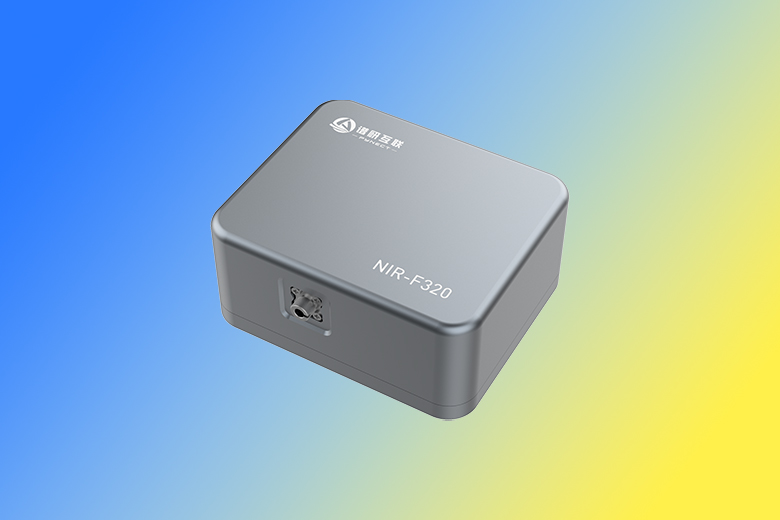
1. Key Features
- Enclosed fiber-interface unit: Adds an enclosure and Type-C connector to the NIR-M-F13 module, suited for lab setups, project demos and small-batch device integration.
- Covers 1600-2400nm: Captures NIR absorption features of O-H, C-H and N-H hydrogen-bearing groups in this band.
- SMA905 fiber interface: Works with reflectance probes, transmission holders, integrating spheres, immersion probes, flow cells or cosine correctors for flexible measurement geometries.
- Unit-friendly connector: Type-C replaces the bare-board Micro USB, reducing wear from frequent plugging and field connection risks.
- Development support: Interfaces with PC software, embedded controllers and customer algorithms for method development and dedicated detection systems.
2. Specifications
2.1 Technical Parameters
| Item | Parameter |
|---|---|
| Model | NIR-F320 |
| Type | Enclosed fiber-coupled NIR spectrometer |
| Internal module | NIR-M-F13 |
| Added configuration | Enclosure, Micro USB to Type-C |
| Wavelength range | 1600-2400nm |
| Signal-to-noise ratio | 3000:1 @2200nm |
| Optical resolution | Typ. 12nm |
| Wavelength accuracy | Typ. +/-1 nm |
| Detector | 1mm standard InGaAs (uncooled) |
| Slit size | 1.8mm x 0.025mm |
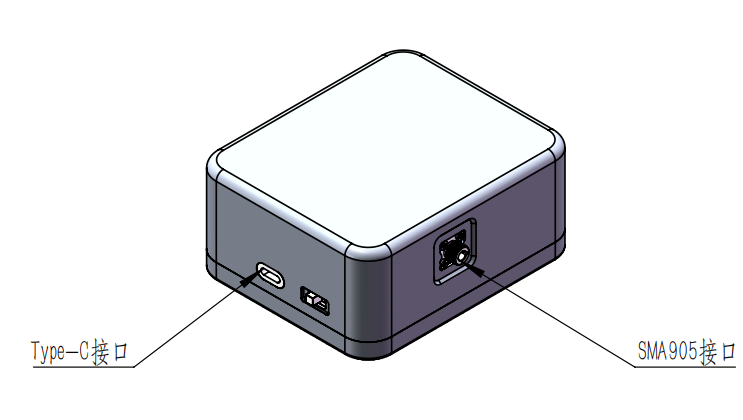
| Fiber interface | SMA905 |
| Measurement modes | Fiber transmittance / reflectance / diffuse reflectance / integrating sphere / immersion probe |
| Light source configuration | External source or fiber accessories per setup |
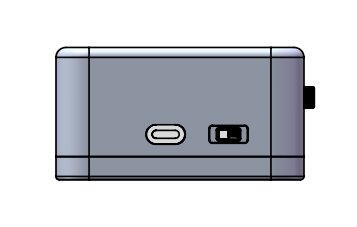
| Communication | Type-C (UART expandable) |
| Power | USB or UART powered |
| Power requirement | 5V DC, 0.2A DC |
| Operating temperature | 0-40 degC, RH max. 85% |
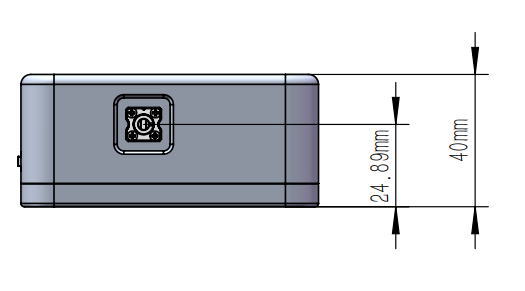
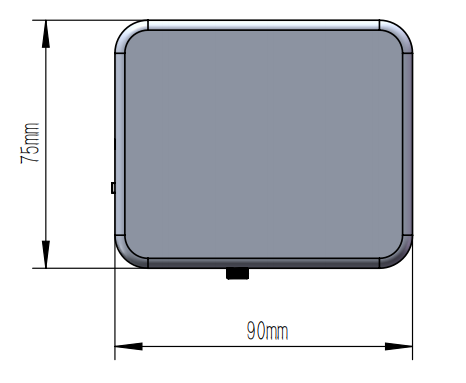
| Dimensions | 90mm x 75mm x 40mm |
| Weight | Per enclosure and interface configuration |
2.2 Structure and Dimensions
3. Applications
The NIR-F320 is an enclosed fiber-interface NIR spectrometer for users who build their own optical paths but want to avoid bare-board connector risks. Swap accessories to switch between transmittance, reflectance, transflectance, integrating sphere or immersion probe paths - suited for lab method development, online test setups, dedicated detectors and teaching/research platforms.
Typical uses include liquid transmittance absorbance measurement, film or lens transmittance testing, diffuse reflectance of powders and granules, light source wavelength distribution, and in-process online spectral monitoring.
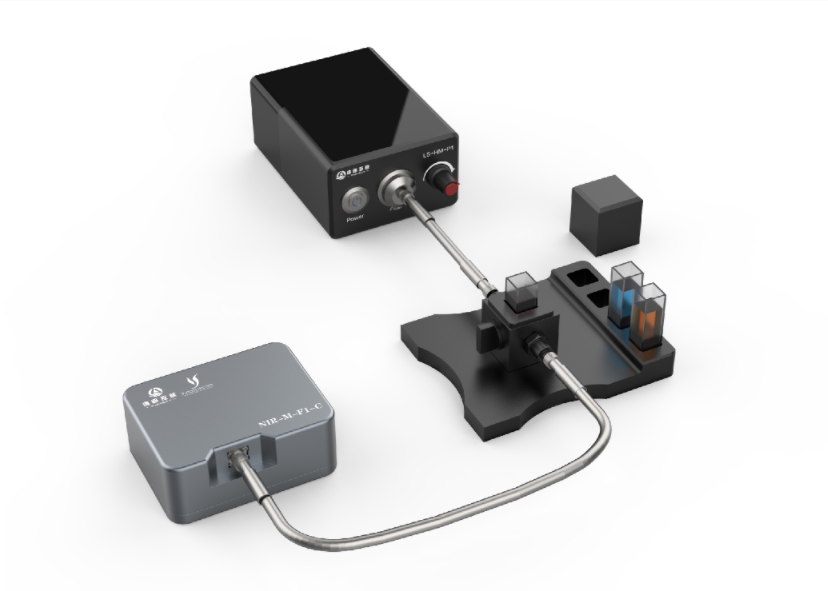
Liquid cuvette holder transmission
Measure solution transmittance or absorbance with an external source and cuvette holder
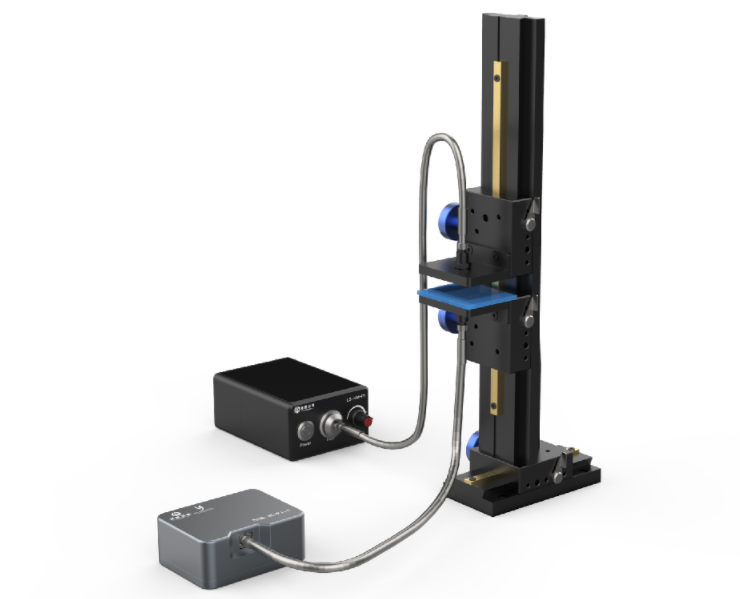
Solid adjustable-gap holder transmission
Transmittance testing of transparent solids, films and lenses
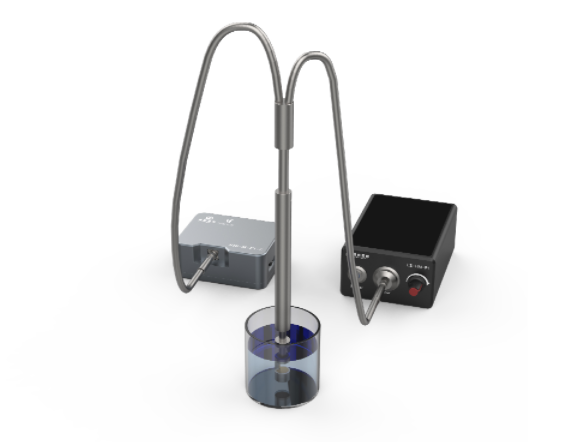
Liquid immersion probe
Insert the probe into liquid or a flow cell for online or process monitoring
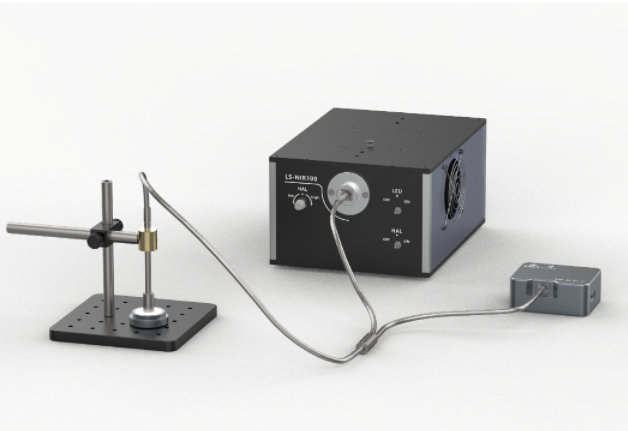
Solid reflectance probe
Reflectance spectra of powders, granules and sheets via reflectance probe
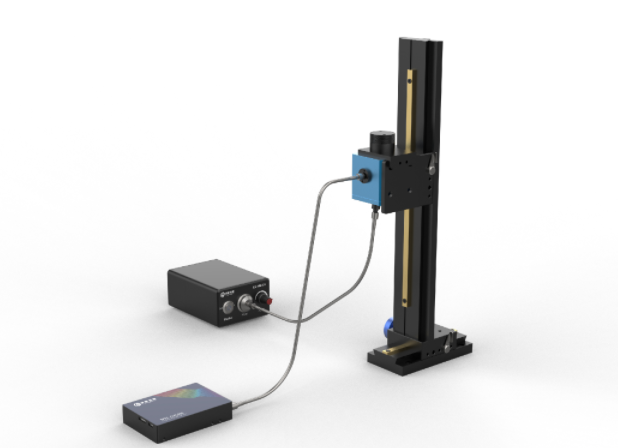
Solid reflectance integrating sphere
For strongly diffusing or non-uniform surface samples
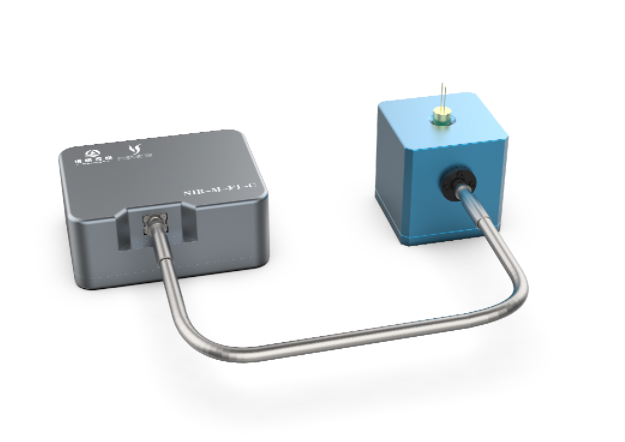
LED wavelength test
Measure source wavelength, peak and FWHM with integrating sphere or fiber accessories
4. Typical Spectra
The following images are typical illustrative spectra or application diagrams for the covered bands, showing sample types and characteristic absorption regions - not per-unit measured data. Aqueous sample illustrations use short paths under 2mm to avoid water saturation in high-absorption regions.
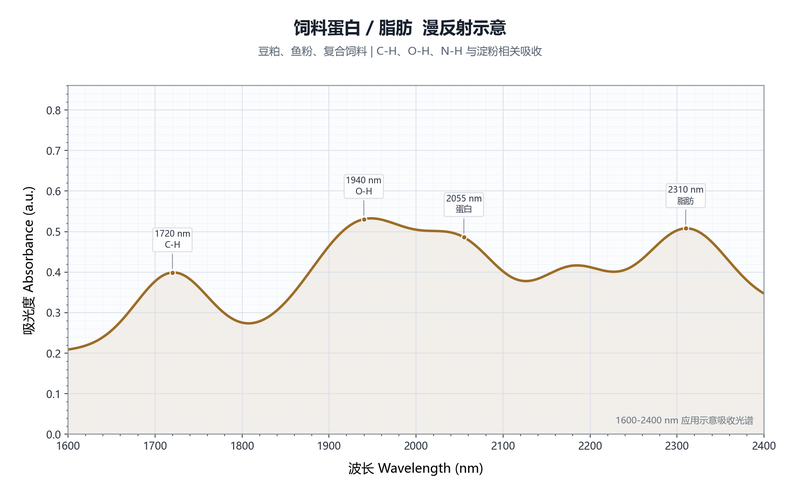
Feed protein and fat diffuse reflectance illustration
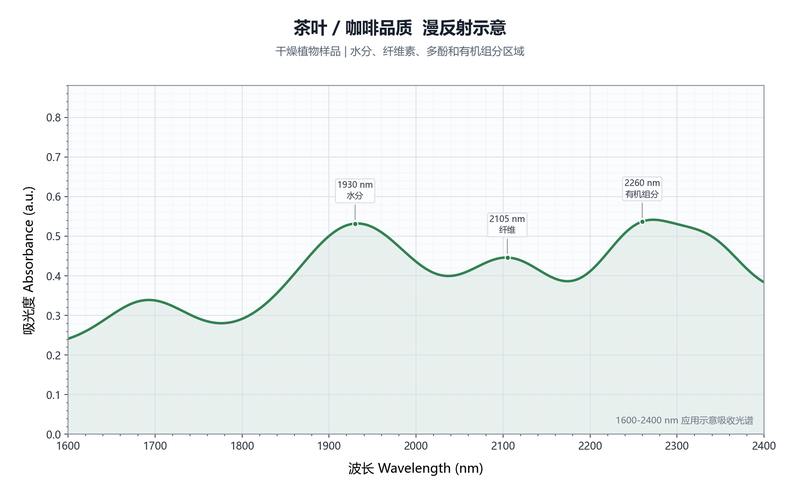
Tea and coffee quality diffuse reflectance illustration
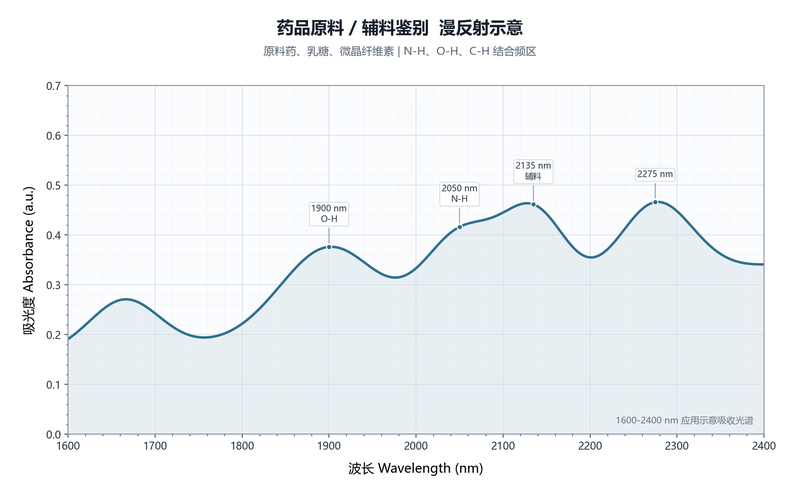
Pharmaceutical raw and auxiliary material identification illustration
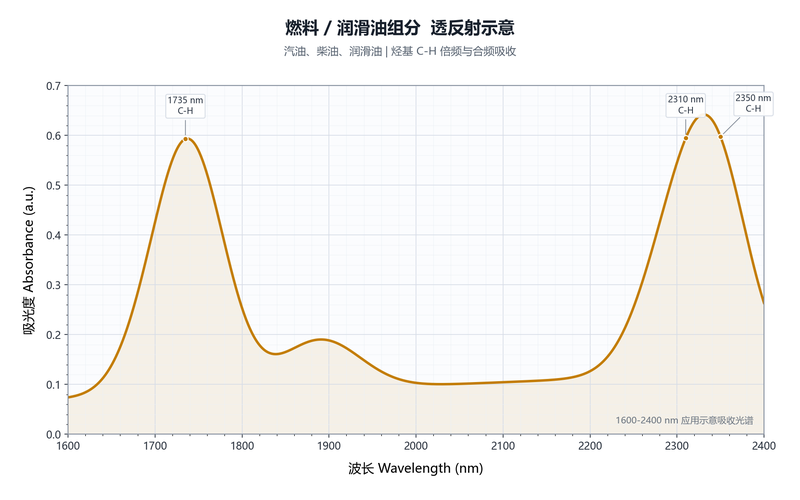
Fuel and lubricant composition transflectance illustration
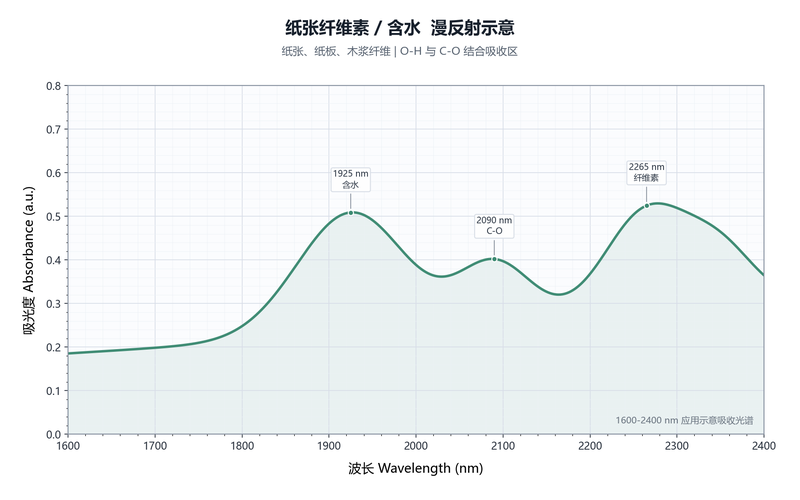
Paper cellulose moisture diffuse reflectance illustration
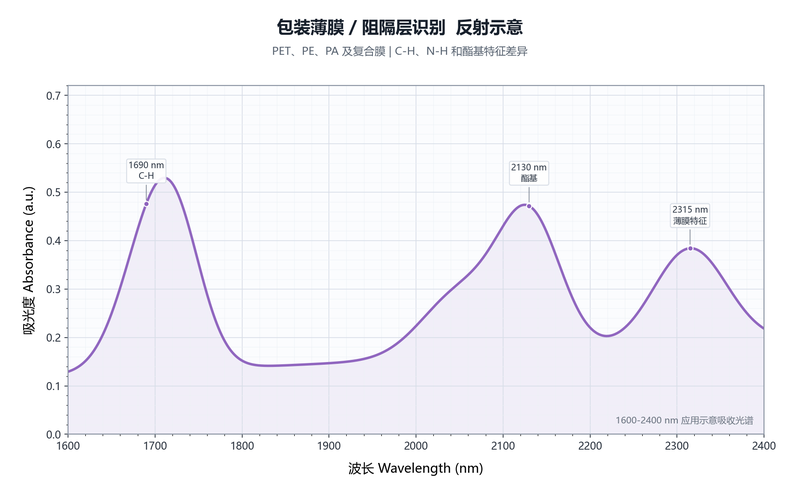
Packaging film barrier layer identification illustration
5. Ordering Information
| Product | Model | Qty | Unit Price | Amount (CNY) |
|---|---|---|---|---|
| Fiber-coupled NIR spectrometer | NIR-F320 | 1 | 47500 | 47500 |
| Total | 47500 |
Prices are for website selection display. Actual quotations vary with enclosure, interface, software, accessories, calibration and batch quantity; the sales quotation prevails for formal orders.
6. Technical Principle
6.1 Chemical Principle
NIR spectroscopy is molecular vibrational spectroscopy. Fundamental vibrations lie mainly in the mid-infrared, while overtones and combination transitions fall in the 700-2500nm NIR region. Covering 1600-2400nm, this instrument captures characteristic absorption of O-H, C-H and N-H groups, suited for qualitative identification, content prediction and process monitoring with chemometric models.
NIR spectra usually rely not on a single peak but on absorption features across bands for modeling. In practice, preprocessing and modeling methods such as smoothing, normalization, SNV, first/second derivative, MSC or PLS reduce the effects of sample form, path differences, scattering and temperature drift.
6.2 Optical Principle
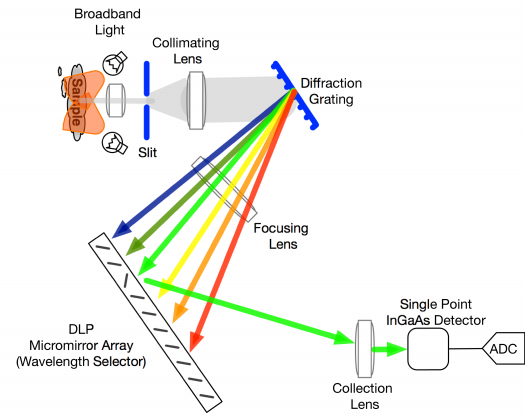
This NIR series uses a DLP spectroscopic architecture with grating dispersion. Light passes through a slit, is collimated onto a diffraction grating, and the dispersed wavelengths are directed onto a digital micromirror array (DLP). Each micromirror is programmed to sequentially reflect its wavelength to a single-point InGaAs detector; the ADC converts the signal and resolves it into a spectrum. See the diagram below:
6.3 Measurement Principle
Fiber-type unit results depend on the external optical path. Typically acquire dark background and reference spectra first, then the sample spectrum; the software computes transmittance, reflectance or absorbance per mode. For stable models, fix source warm-up time, fiber length, probe angle, sample position and reference standards in practice.
7. User Guide
7.1 Software Usage
- Connect via Type-C to a PC or controller, open the software and confirm the device is recognized.
- Set integration time, averaging, dark background and reference acquisition per accessory type.
- Re-acquire reference spectra after switching probes, holders or integrating spheres before formal measurement.
7.2 Notes
- Keep fiber end faces, probe windows and integrating sphere ports clean - avoid dust, oil and scratches.
- Aqueous samples saturate easily in high NIR absorption regions; shorten the path, lower concentration or dilute before measuring.
- Avoid sharp bends, crushing and repeated twisting of fibers to prevent coupling loss.
- Keep sampling position, angle and reference conditions consistent within a batch.
7.3 FAQ
Q1: What are the main differences among F210, F310 and F320?
A: The core differences are wavelength range and detector configuration. Choose by the target sample's characteristic absorption region, SNR needs and budget.
Q2: Can it measure liquids or solids directly?
A: Yes, with an external light source and matching accessories such as cuvette holders, reflectance probes, integrating spheres or immersion probes. The fiber-type unit itself is not limited to a single optical path.