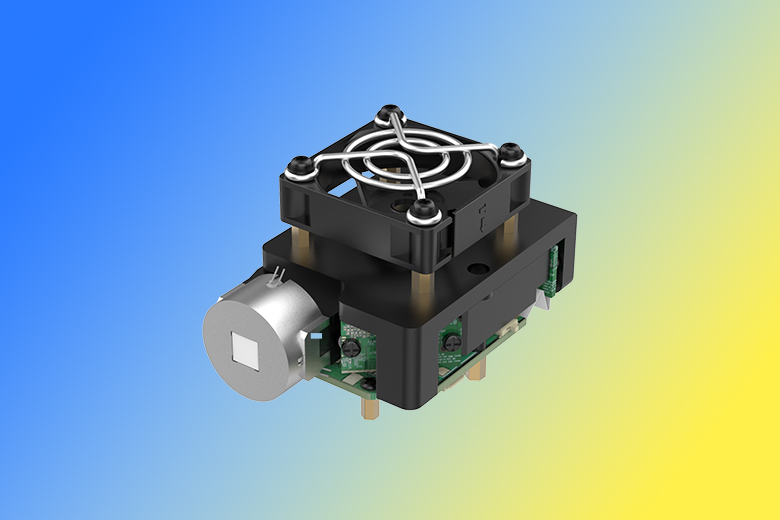
1. Key Features
- Contact reflectance measurement: Built-in light source and reflectance optical path; place the module against the sample surface to acquire reflectance or absorbance spectra.
- 1600-2400nm coverage: Suited for characteristic analysis of food, agricultural, material, chemical or pharmaceutical samples within this band.
- Compact integration: The bare-board module is easy to embed in handheld devices, online inspection probes or customized analyzers.
- Stable repeatable measurement: Fixed light source, window and receiving optical path reduce errors from external optical-path setup.
- Ready for secondary development: USB, UART, optional Bluetooth and multi-language SDKs are provided for fast integration.
2. Specifications
2.1 Technical Parameters
| Item | Parameter |
|---|---|
| Model | NIR-M-R13 |
| Type | Reflectance near-infrared spectral module |
| Wavelength range | 1600-2400nm |
| Signal-to-noise ratio | 3000:1 @ 2200nm |
| Optical resolution | Typ. 12nm |
| Wavelength accuracy | Typ. ±1nm |
| Detector | 1mm extended InGaAs (uncooled) |
| Slit size | 1.8mm × 0.025mm |
| Light source | Built-in 3× 0.7W tungsten lamps |
| Measurement mode | Diffuse reflectance / contact reflectance |
| Communication | Micro USB / UART / Bluetooth BLE (optional) |
| Sensor | Temperature & humidity sensor |
| Power requirement | 5V DC, Min. 1.2A DC |
| Operating temperature | 0-40°C, RH Max. 85% |
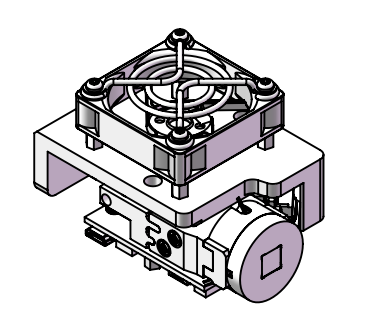
| Dimensions | 75.8mm × 48mm × 48mm |
| Weight | <150g |
2.2 Dimensions
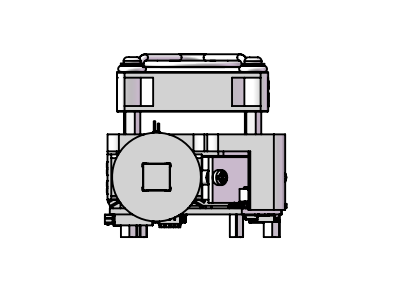
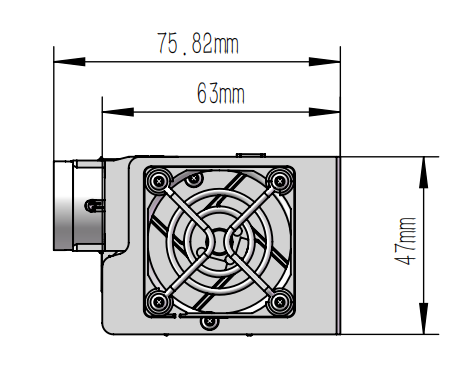
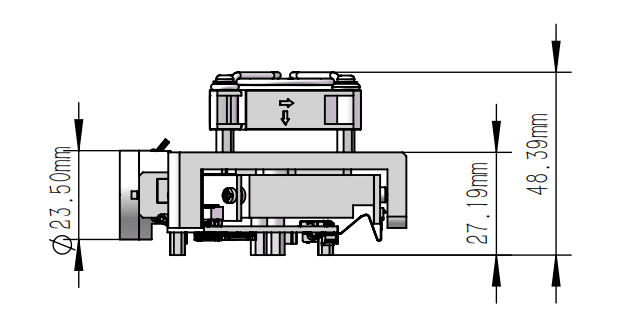
3. Applications
The NIR-M-R13 is suited for developing handheld, benchtop or online non-destructive testing instruments. The reflectance structure works well for solid, powder, granule and sheet samples whose surface can be contacted directly or that can be placed in a transparent container. Typical targets include agricultural products, food, plastics, textiles, leather, pharmaceuticals, soil and mineral materials.
In practical projects, we recommend fixing the sample loading method, pressing pressure, reference whiteboard and number of scans according to the sample state to establish a stable sampling SOP, then combining chemometric models to complete qualitative identification or quantitative analysis.
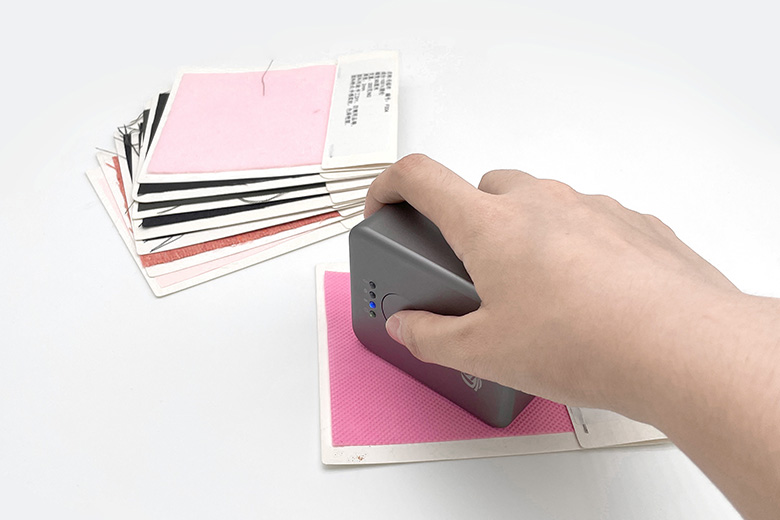
Fabric testing
Qualitative or quantitative analysis of fabric composition and content ratio
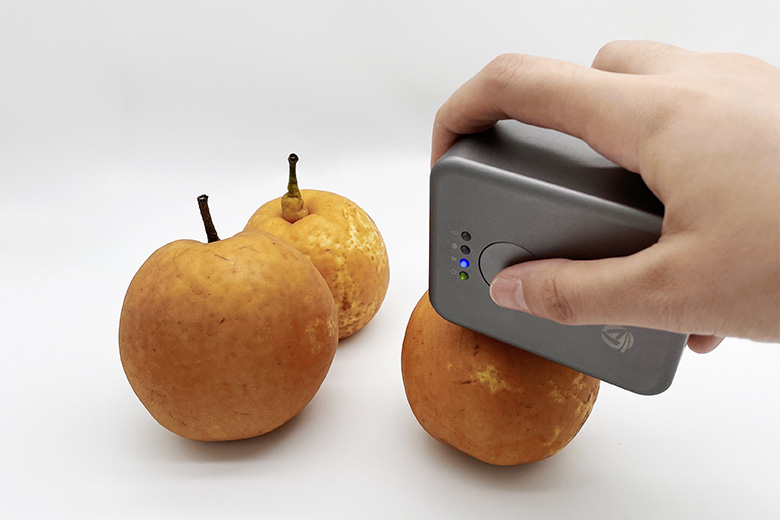
Fruit testing
Quantitative analysis of quality indicators such as sugar content, moisture and freshness
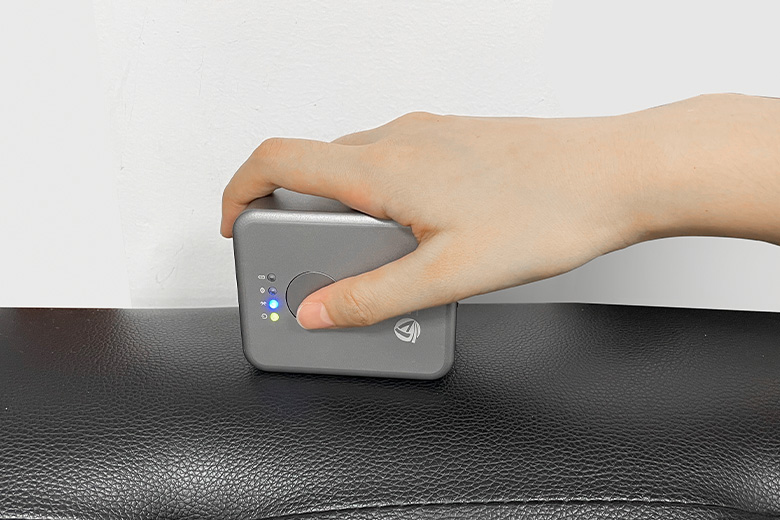
Leather identification
Qualitative analysis of leather composition, supporting authenticity identification
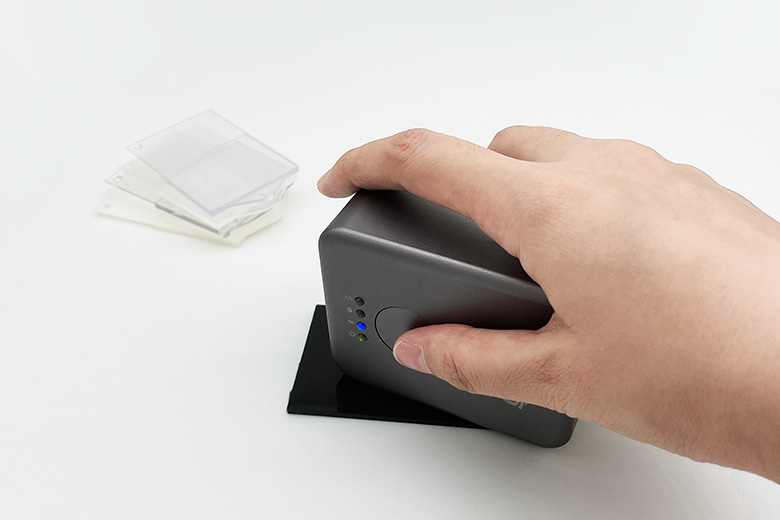
Plastic identification
Rapid qualitative identification of plastic composition, suitable for incoming inspection
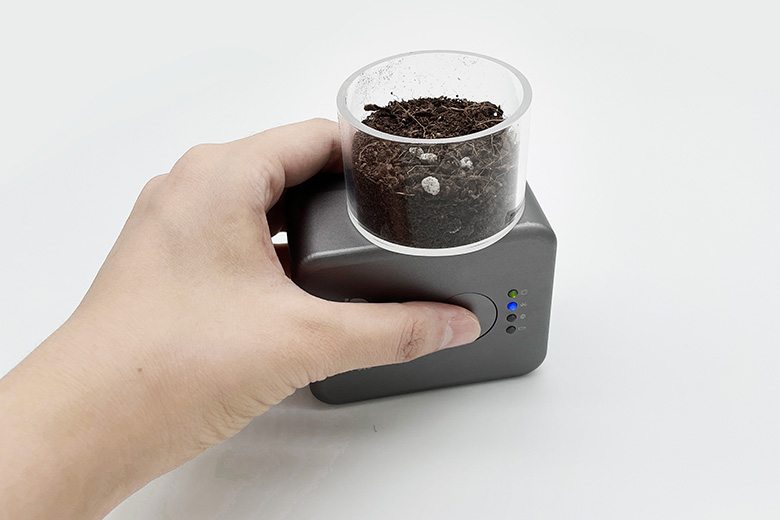
Soil analysis
Quantitative detection of soil fertility indicators; powder samples must be measured in a transparent quartz container
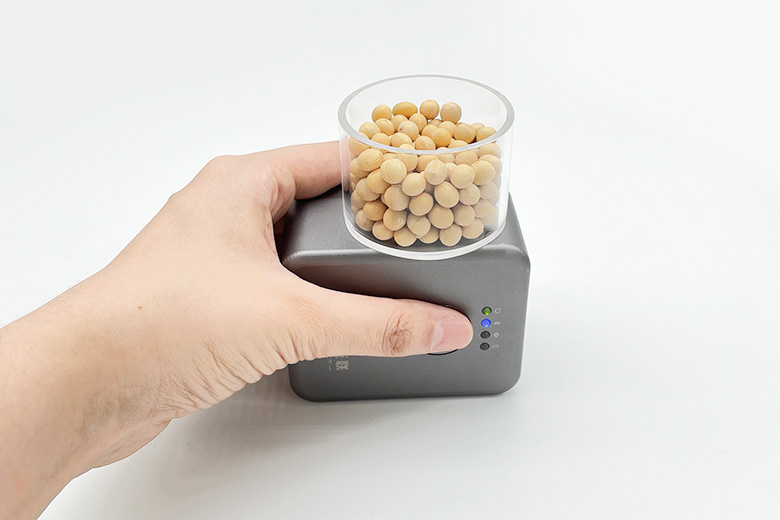
Grain testing
Qualitative or quantitative analysis of grain quality composition; granule samples must be measured in a transparent container
4. Typical Spectra
The following spectra illustrate the reflectance spectral characteristics or application characteristic regions of common samples within the corresponding band of this model, and do not represent per-unit measured data for this model.
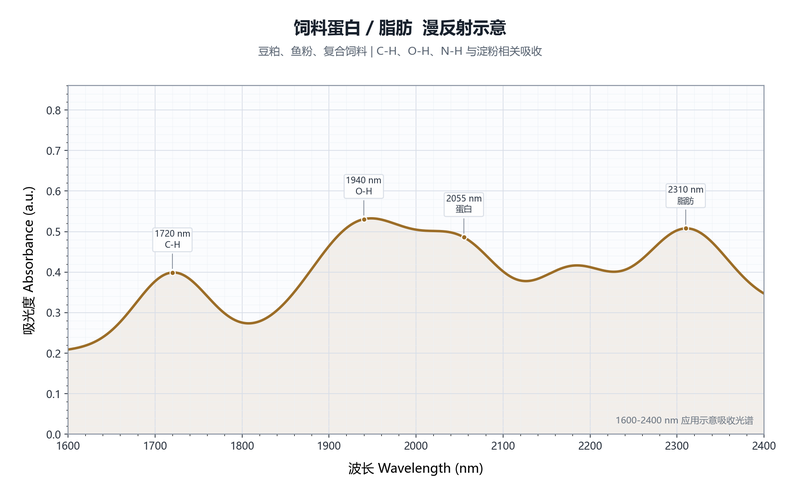
Feed protein and fat schematic
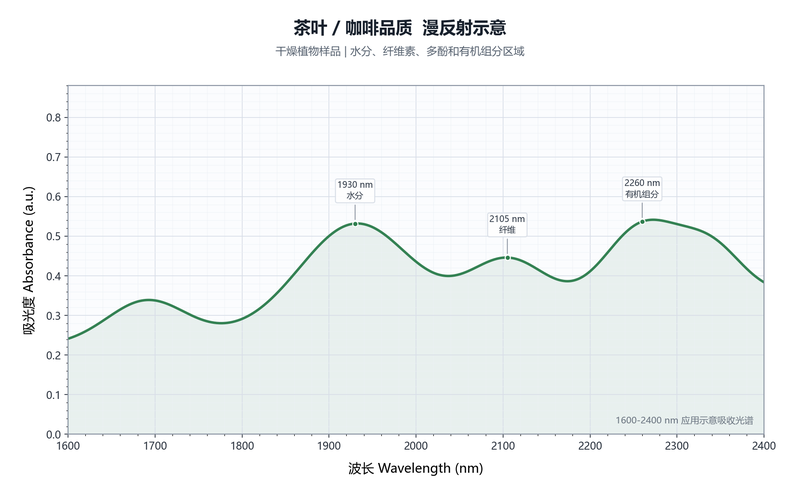
Tea and coffee quality schematic
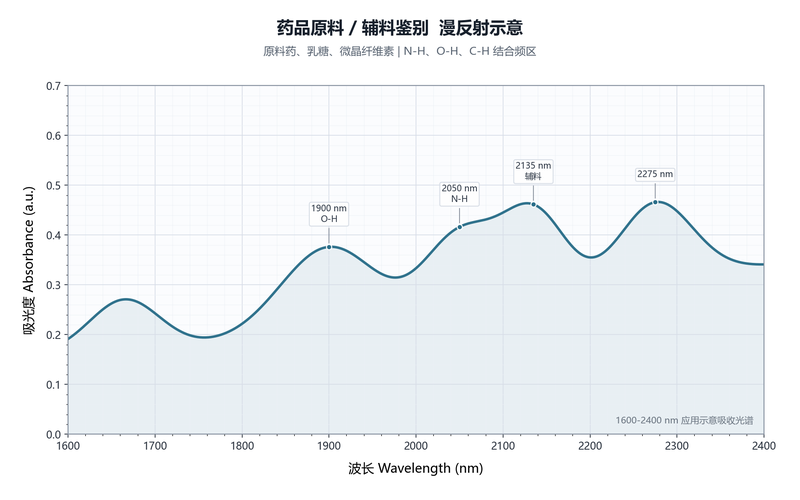
Pharmaceutical raw material and excipient identification schematic
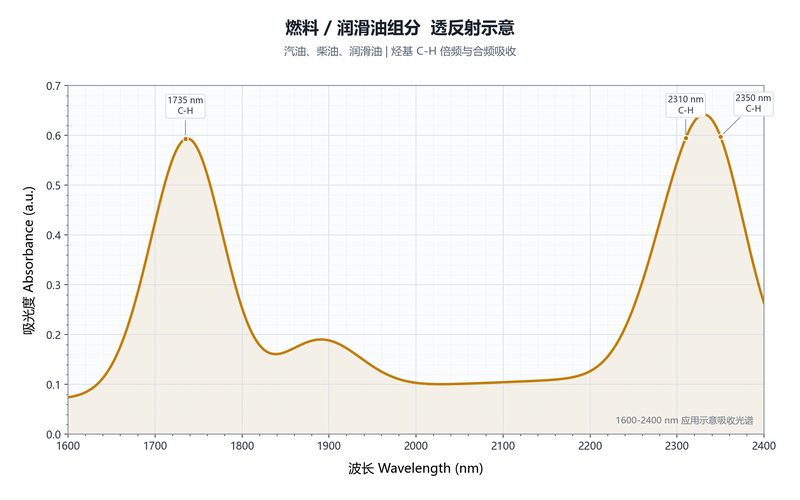
Fuel and lubricant composition schematic
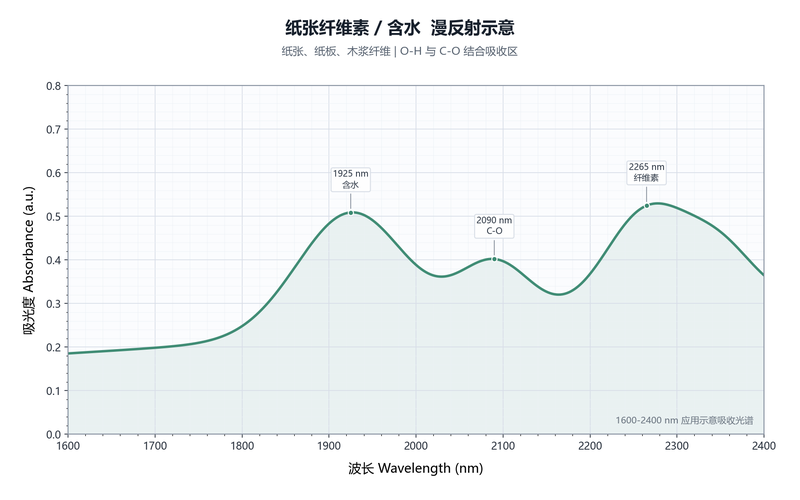
Paper cellulose moisture schematic
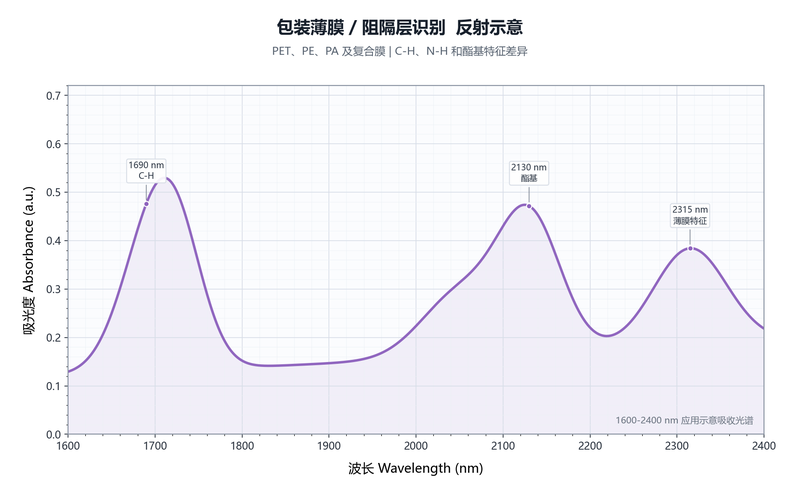
Packaging film barrier layer identification schematic
5. Ordering Information
5.1 Bare-Board Module Selection
Reflectance near-infrared measurement normally requires a standard reference whiteboard for Reference acquisition; it is recommended to configure it together with the module.
| Product name | Model | Qty | Unit price | Amount (CNY) |
|---|---|---|---|---|
| Reflectance near-infrared spectral module | NIR-M-R13 | 1 | 53800 | 53800 |
| Standard reference whiteboard | STD-DR100 | 1 | 950 | 950 |
| Total | 54750 |
5.2 Enclosed Unit Selection
For non-integration users or laboratory testing scenarios, you can choose the corresponding enclosed unit NIR-R320. The complete instrument is better suited for handheld testing, on-site demonstrations and mobile connections, and also reduces wear on the bare-board interfaces and optical window during repeated use.
| Product name | Model | Qty | Unit price | Amount (CNY) |
|---|---|---|---|---|
| Reflectance near-infrared spectrometer | NIR-R320 | 1 | 55800 | 55800 |
| Standard reference whiteboard | STD-DR100 | 1 | 950 | 950 |
| Total | 56750 |
6. Technical Principle
6.1 Chemical Principle
Near-infrared spectroscopy is a form of molecular vibrational spectroscopy. The fundamental molecular vibrations lie mainly in the mid-infrared region, while overtone and combination transitions fall within the 700-2500nm near-infrared region. This product covers the 1600-2400nm band and can obtain characteristic absorption information of hydrogen-containing groups such as O-H, C-H and N-H, making it suitable for qualitative identification, content prediction and process monitoring when combined with chemometric models.
NIR spectra usually do not rely directly on a single peak; instead, modeling combines the absorption characteristics of multiple bands. In practical projects, preprocessing and modeling methods such as smoothing, normalization, SNV, first derivative, second derivative, MSC or PLS are often applied to reduce the effects of sample morphology, optical-path differences, scattering and temperature drift.
6.2 Optical Principle
The reflectance product fixes the light source, scanning window and receiving optical path within the instrument structure. After the sample is illuminated, the diffuse reflectance signal enters the DLP spectral core for wavelength selection and InGaAs detection, making it suitable for non-transparent solids, powders, granules and sheet samples.
This series of near-infrared spectral products is based on the DLP spectral architecture and uses a grating dispersion design. Light passes through the slit and is collimated onto the grating (diffraction); the different wavelengths produced by the grating are projected side by side onto the digital micromirror array (DLP) mirrors. By programmatically controlling each micromirror, the corresponding wavelengths are reflected in sequence onto a single-point InGaAs detector, then converted to digital signals by the ADC and resolved into spectral curves. The schematic is shown below:
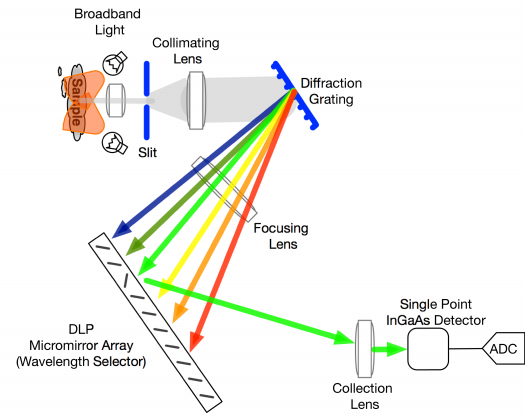
This structure replaces the traditional linear-array detector with a single-point InGaAs detector, reducing system cost while maintaining near-infrared spectral acquisition capability. It is well suited for miniaturization, high-volume production and embedded integration.
6.3 Measurement Principle
Reflectance measurement normally uses a standard whiteboard as the reference spectrum, then acquires the sample spectrum and calculates the reflectance. Absorbance can be obtained from A = -log10(R), where R is the sample reflectance. For dark, rough or granular samples, control the sample thickness, compaction level and window contact condition.
7. Usage Guide
7.1 Software Usage
- Acquire the standard whiteboard reference first, then acquire the sample spectrum.
- For the same batch of samples, keep the integration time, number of averages, scanning window distance and sample compaction state consistent.
- For modeling data, it is recommended to save the raw, reflectance and absorbance spectra to facilitate subsequent preprocessing comparison.
7.2 Precautions
- Keep the standard whiteboard clean to avoid reference-spectrum drift caused by contamination.
- For powder and granule samples, use a fixed sample cup or a pressing method to reduce scattering differences.
- When measuring transparent or translucent samples, add a whiteboard backing or switch to a transmission solution depending on the test purpose.
7.3 FAQ
Q1: Is a standard whiteboard required for the NIR-M-R13?
A: Reflectance and absorbance calculations require a Reference, and the standard whiteboard is the most commonly used reference. If you have a custom reference substrate, fix the reference method and keep it consistent in modeling.
Q2: Can it measure liquids?
A: The reflectance module is not suitable as a routine liquid transmission measurement solution. For transparent or translucent liquids, we recommend a transmission module or a fiber-coupled cuvette solution.