Overview
The LS-XE-FH is a broadband xenon flash light source covering 185-1100nm from deep UV to NIR. It uses a genuine Japanese Hamamatsu bulb with external pulse triggering and a flash life exceeding 10^9 shots. It is the core source for UV absorption, gas detection, fluorescence excitation and online monitoring integration.
1. Key Features
- Broadband output, instant-on: Covers 185-1100nm without warm-up; reaches stable output quickly - especially suited to UV measurements.
- Adjustable intensity and frequency: Micrometer attenuation for intensity; external pulse signal sets flash frequency for diverse test needs.
- Efficient optics, flexible output: Standard SMA905 interface supports fiber export or direct illumination; rear and side connection options for different layouts.
- Long life, stable continuous operation: Genuine Hamamatsu xenon bulb rated for 10^9 flashes, dramatically reducing replacement frequency for long-term online monitoring.
- Compact and easy to integrate: 111 x 42 x 60 mm, 180 g - easy to embed in spectroscopy systems, online analyzers or portable instruments.
2. Specifications
| Item | Parameter | Notes |
|---|---|---|
| Model | LS-XE-FH | |
| Arc length | 1.5mm | |
| Window material | UV glass | |
| Wavelength range | 185-1100nm | UV-VIS-NIR |
| Main discharge capacitor | 0.141uF | |
| Trigger input impedance | 220Ohm | |
| Stability | 1.2% | (max-min)/max output |
| Average output power | 2-3.2W | |
| Optical interface | SMA905 | Industry standard |
| Service life | >10^9 | Flash count |
| Adjustable intensity | Yes | Micrometer precision |
| Power supply | 5V/2A | Recommended |
| Mounting holes | Bottom M3 threads | Front M3 for direct illumination without panel |
| Dimensions / weight | 111 x 42 x 60 mm; 180 g |
3. Appearance
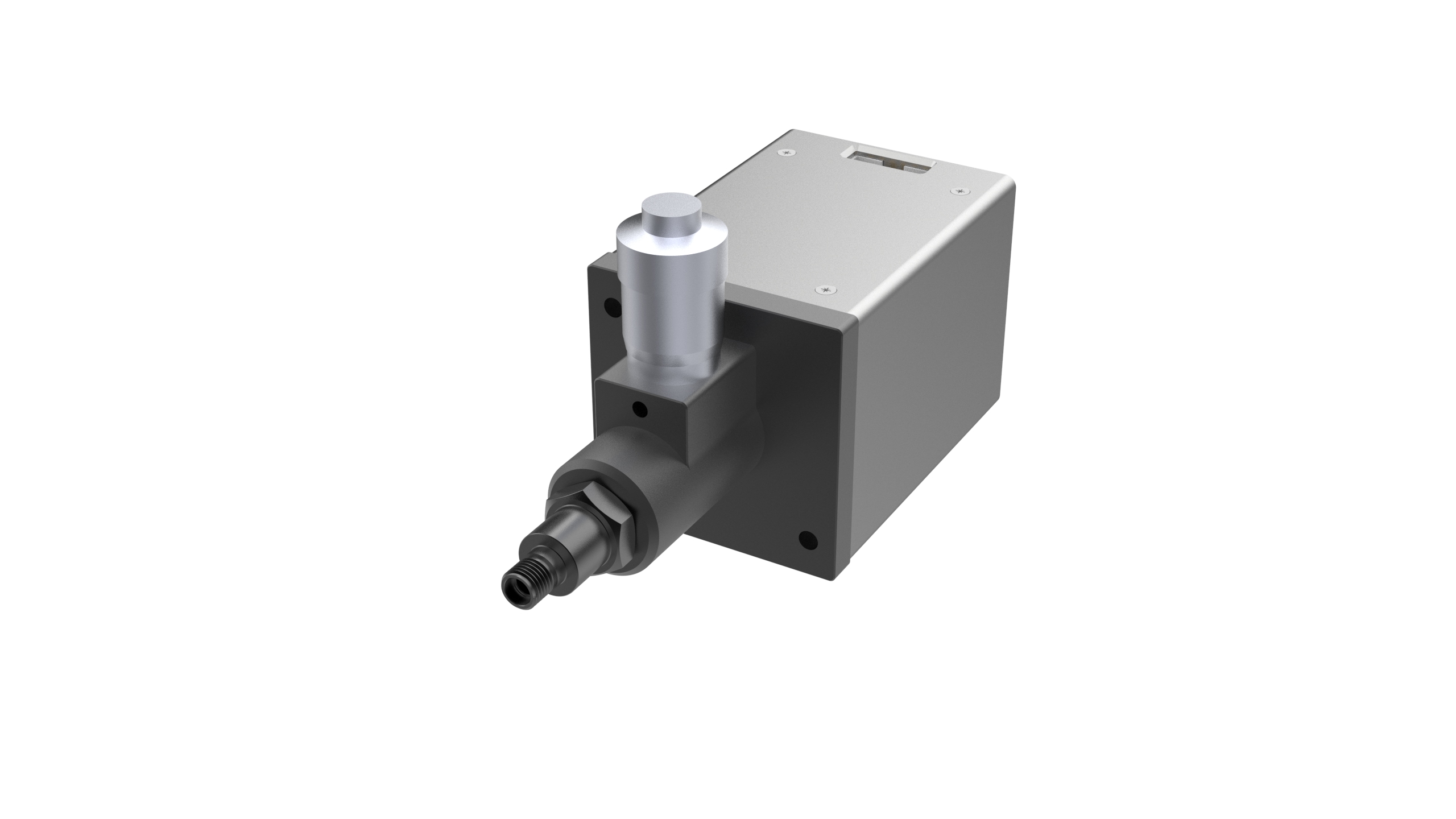
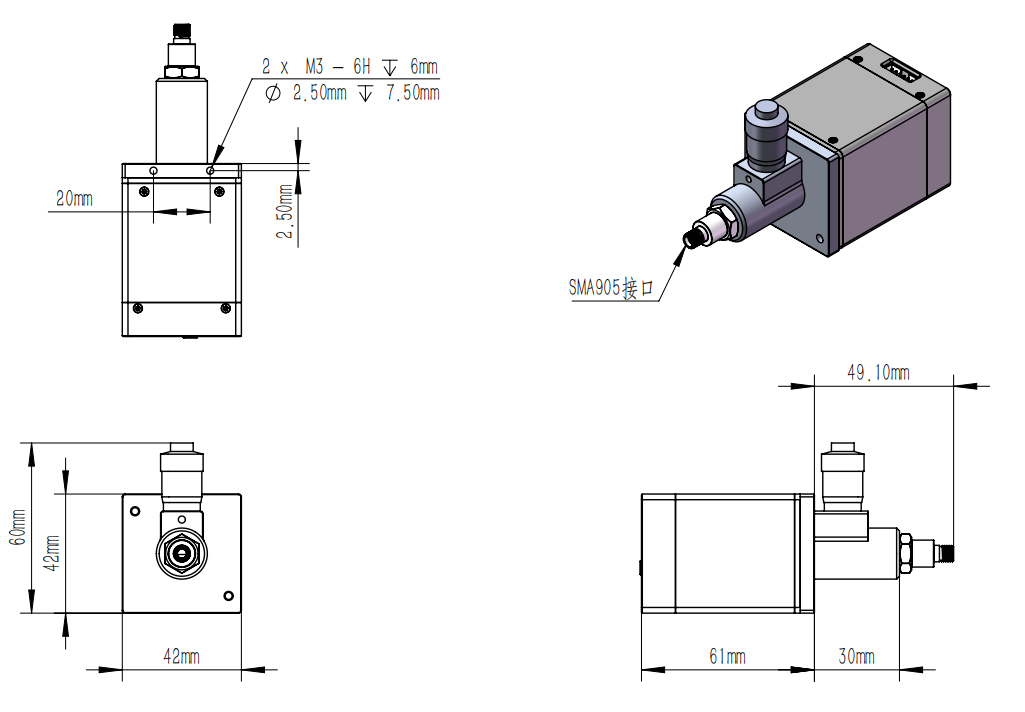
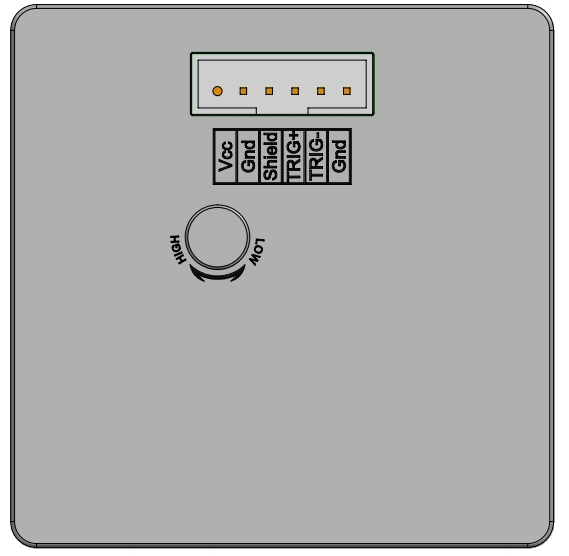

4. Working Principle
4.1 Xenon flash emission
The xenon flash lamp is a gas-discharge source: a main capacitor stores energy and discharges through xenon on a trigger signal, producing broadband pulsed light from deep UV to NIR. The xenon discharge spectrum combines a continuum with characteristic lines; its 185-1100nm coverage makes it the key source for UV absorption and UV transmittance - bands tungsten-halogen lamps cannot reach.
4.2 External pulse triggering
The LS-XE-FH fires on a TRIG+ rising edge. Power with 5V (recommended) or 12V DC; connect TRIG- to the signal source negative or Gnd. Maximum flash frequency is 79Hz; staying below 60Hz is recommended. For common-ground setups, tie the spectrometer GND to the unit GND.
4.3 Synchronization with spectrometer external trigger
Synchronize the flash with the spectrometer's external-trigger acquisition to capture the spectrum at the flash instant, greatly improving SNR and shortening measurement time. Verify that your spectrometer supports external triggering and its pinout; Pynect can provide detailed electrical parameters.
5. Common Setups
| Setup | Typical configuration | Main use |
|---|---|---|
| UV absorption | Flash lamp + cuvette holder + fiber | 185-400nm UV absorption |
| Gas detection | Direct illumination + gas cell + spectrometer | Characteristic gas absorption spectra |
| Fluorescence excitation | Flash lamp + filter + reflectance probe | UV-excited fluorescence |
| Online monitoring | Flash lamp + flow cell + externally-triggered spectrometer | Water quality and process monitoring |
6. Setup and Measurement Steps
UV absorption example:
- Connect 5V/2A DC: Vcc positive, Gnd negative.
- Connect the source to the cuvette holder input with an SMA905 fiber; connect the output to an external-trigger-capable fiber spectrometer.
- Connect the trigger source to TRIG+/TRIG- and set the flash frequency (below 60Hz recommended).
- Switch the spectrometer to external-trigger mode to sync acquisition with flashes.
- Acquire dark background and blank reference, insert the sample; the software computes the UV absorption spectrum.
7. Applications
- UV spectroscopy: 185-400nm UV absorption and transmittance.
- Gas detection: characteristic UV absorption of SO2, NOx, VOC.
- Water analysis: COD and nitrate via UV absorption.
- Material testing: UV-cure materials and UV-blocking coatings.
- Online monitoring integration: pulsed source with low power and long life for 7x24 operation.
8. Spectrometer Pairing
| Spectrometer | Band match | Recommended measurements |
|---|---|---|
| SPEC-CMS960 (190-1100nm) | Full UV-VIS | UV absorption, transmittance |
| SPEC-CDS350 (190-1100nm) | Full UV-VIS | UV absorption, fluorescence excitation |
| NIR series | NIR | NIR transmittance |
For deep UV (<250nm), confirm the UV transmittance of your spectrometer and fibers; external-trigger-capable spectrometers achieve the best SNR with synchronized flash acquisition.
9. FAQ
Q: Why recommend 5V instead of 12V?
A: 5V is the recommended supply with lower power and heat. Never exceed 12V (12V exclusive) or the circuit may burn out.
Q: What is the maximum trigger frequency?
A: 79Hz maximum; below 60Hz is recommended. Ensure cooling during prolonged high-frequency operation.
Q: How often must the bulb be replaced?
A: Hamamatsu xenon bulbs last 10^9 flashes - thousands of hours at 60Hz, typically years in normal use.
Q: Can it illuminate a sample directly without fiber?
A: Yes. Remove the panel and use the front M3 holes to fix it for direct illumination of samples or gas cells.
Q: How do I get stable spectra in flash mode?
A: Set the spectrometer to external-trigger mode synchronized with the flash and increase averaging to improve SNR and stability.
Q: Can it be combined with a tungsten-halogen lamp?
A: Yes. The LS-XE-FH covers the UV band and the halogen lamp covers visible/NIR; together they cover 185-3000nm.
10. Selection Guide
| Item | LS-XE-FH | LS-HM series (halogen) |
|---|---|---|
| Wavelength range | 185-1100nm | 350-3000nm |
| Source type | Pulsed xenon | Continuous halogen |
| UV capability | Deep UV | Weak UV |
| Triggering | External pulse | None required |
| Typical use | UV absorption, gas detection | Visible/NIR transmittance and reflectance |
- UV measurements below 400nm: choose the LS-XE-FH.
- Visible/NIR continuous spectra only: LS-HM-C1 or LS-HM-P3.
- Combine both for full 185-3000nm coverage.
11. Precautions
- Never power with more than 12V (12V exclusive) or the circuit may burn.
- Use 5V (recommended) or 12V DC; connect Vcc and Gnd correctly.
- Keep trigger frequency below 60Hz; ensure cooling during prolonged high-frequency use.
- The UV glass window is quartz - avoid scratches and keep it clean.
- Align connectors before attaching fibers; avoid direct strong light into eyes.
- Mount via bottom or front M3 holes without blocking ventilation.
12. Package Contents and After-Sales
Package: LS-XE-FH unit, 5V/2A adapter, SMA905 fiber patch cord, trigger cable, user manual, warranty card.
After-sales: one-year whole-unit warranty; xenon bulbs covered by actual service life. Lifetime technical support and trigger-circuit design consultation with 7x24 response.
13. Ordering
- Product: LS-XE-FH Xenon Flash Light Source
- Series: Spectroscopy Light Sources
- Technical: Formulas for Common Spectral Measurement Modes
For sample trials or bulk purchases, please contact us.